


From PCR to LAMP: The evolution of rapid-testing in food safety
Want your work tasks to be simpler and faster? The answer for most of us is, yes!
Food manufacturers want to move food from the plant to the shelf as quickly as possible. When testing for pathogens, getting an answer quickly can help get your products to the shelf faster. Culture-based tests or rapid methods are the two most common testing methods. Culture-based tests, the historic gold standard in testing, look for growth of pathogens in a specific media. However, they are labor intensive and require from three days to a week for results. In contrast, rapid methods have evolved in recent years, and results are now typically available by the next day.
Raj Rajagopal, Ph.D., is a senior global technical service expert in 3M’s Food Safety Lab. He explains that two types of rapid pathogen detection exist – either immuno-based assays or DNA-based assays. DNA-based rapid-method tests are generally considered to be the most accurate.
“They look for the specific and unique DNA sequence of the targeted bacteria,” says Raj. “They can detect the gene codes for pathogens like Salmonella or Listeria in the sample.”
DNA-based methods: How does PCR differ from LAMP?
Among the several kinds of DNA-based rapid methods, polymerase chain reaction (PCR) has been used for pathogen detection for more than 30 years. It can detect foodborne pathogens like Salmonella, Listeria, Listeria monocytogenes and Cronobacter. PCR uses heating and cooling cycles to cause DNA melting and replication.
Here’s how PCR works: The process uses heat to separate the two strands of DNA, and then temperatures are cooled, allowing primers to bind to the DNA followed by replication by a polymerase enzyme. Repeated cycles of heating and cooling, amplify the DNA for detection of pathogens.
In contrast, loop-mediated isothermal amplification (LAMP) is a technology that also uses DNA-based testing. LAMP technology is used in the 3M™ Molecular Detection System, which combines isothermal DNA amplification and bioluminescence detection.
Using methods similar to PCR, LAMP technology uses primers that search for the DNA of Salmonella, Campylobacter or other specific pathogens. If the DNA is present in the sample, the primer will bind and begin the replication process. By amplifying the target DNA in combination with some unique chemistry, light is generated in the reaction and is detectable by the instrument.
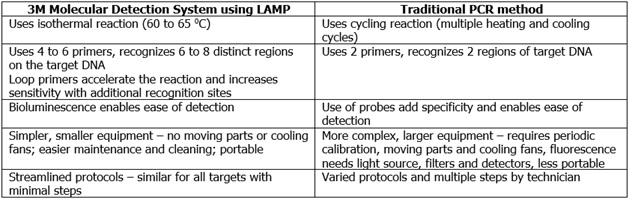
However, LAMP differs from PCR in several ways. It uses four to six primers to recognize six distinct regions of DNA or RNA, while PCR uses two primers to recognize two regions. The polymerase used in LAMP cause DNA strand displacement and the primer design causes the end of the DNA strand to form a loop. This structure is the basis for amplification and allows for the exponential accumulation of additional double-stranded DNA.
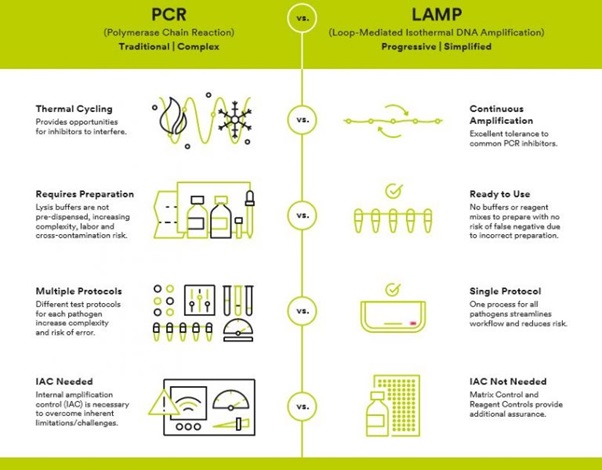
PCR testing requires numerous cycles of heating and cooling to amplify the target – and that calls for more complex equipment. LAMP uses isothermal amplification, meaning it only needs to be heated up to one temperature – 60 to 65 degrees Celsius. That means fewer steps for the technician and smaller, simpler equipment. LAMP also uses bioluminescence to detect the pathogen, so the equipment can detect amplification of the target during the reaction in as little as 15 minutes.
LAMP and PCR comparison
Why switch to LAMP?
LAMP technology is creating a buzz in the research community, and more than 8,000 peer-reviewed publications about the topic have been published since it was introduced.
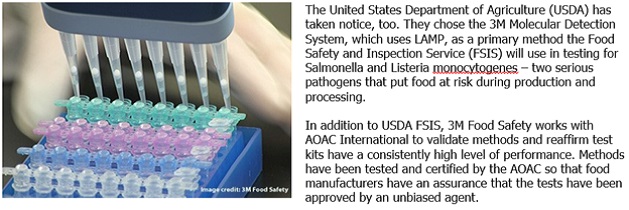
Lisa Monteroso, Senior Regulatory Affairs Associate in 3M Food Safety, emphasizes the importance of an independent lab evaluation:
“It’s important for our methods to perform as expected in the hands of wide variety of users, and independent testing ensures just that. We’re dealing with food safety – foodborne pathogens can cause serious illness or even death – and accuracy of results is critical. The rigorous testing that’s conducted in these certification programs reaffirms our products’ high level of performance and provides our customers with additional data to support method implementation.”
Raj sees many advantages for technicians:
“With PCR, there are multiple steps. You add the enzyme, you heat it and cool it and there are multiple transfers,” he says. “With LAMP there are only two transfers and only one temperature, and only one detection system needed.”
He adds that there are indicators to show when it is heated it turns to yellow, and when it cools, it goes back to pink, so you know that is has reached the correct temperature.
“There are a lot of process controls to make sure everything is working.”

Contact Detail:
3M Food Safety Department
3M Thailand Limited
159 Asokemontri Rd., Klongtoey Nue, Wattana, Bangkok 10110 | Thailand
Tel: 0 2260 8577, M: 098-582 4428
Ms. Narisara Wanigorn E-Mail: nwanigorn@mmm.com
Ms. Masinee Likhitrattanapaiboon E-Mail: maneelik@mmm.com
Ms. Narunras (Kavisra) Bhuyothin E-Mail: kbhuyothin@mmm.com

จาก PCR ถึง LAMP: วิวัฒนาการของการทดสอบความปลอดภัยของอาหารที่รวดเร็ว
ต้องการให้งานของคุณง่ายและเร็วขึ้นไหม? คำตอบส่วนใหญ่ คือ "ใช่"
ผู้ผลิตอาหารต้องการส่งอาหารออกจากโรงงานไปจำหน่ายโดยเร็วที่สุด เมื่อการทดสอบหาเชื้อจุลินทรีย์ก่อโรคได้ผลลัพธ์ที่รวดเร็วยิ่งขึ้น ผลิตภัณฑ์ก็จะนำไปจำหน่ายได้เร็วยิ่งขึ้น โดยทั่วไป 2 วิธีที่ใช้ในการทดสอบเชื้อจุลินทรีย์คือวิธีการเพาะเลี้ยงเชื้อ[1]และวิธีที่รวดเร็ว การเพาะเลี้ยงเชื้อจุลินทรีย์บนอาหารเลี้ยงเชื้อเป็นวิธีการมาตรฐานที่มีมายาวนาน ใช้ในการทดสอบเพื่อตรวจหา การเจริญเติบโตของเชื้อจุลินทรีย์ก่อโรคในอาหารเลี้ยงเชื้อที่จำเพาะ อย่างไรก็ตาม วิธีการนี้จะต้องใช้แรงงานจำนวนมาก และต้องใช้เวลาอย่างน้อย 3 วัน ถึง 1 สัปดาห์ในการออกผล ในทางตรงกันข้ามวิธีที่รวดเร็วมีการพัฒนาอย่างมากในช่วงไม่กี่ปีที่ผ่านมา และได้ผลการทดสอบในวันถัดไป
Dr.Raj Rajagopal เป็นผู้เชี่ยวชาญทางเทคนิคระดับอาวุโสที่ห้องทดลองความปลอดภัยด้านอาหารของ 3เอ็ม เขาอธิบายว่ามีการตรวจหาเชื้อก่อโรคอย่างรวดเร็วสองแบบ กล่าวคือการตรวจสอบทางอิมมูโน และการตรวจสอบด้วยดีเอ็นเอ การทดสอบอย่างรวดเร็วด้วยวิธีการตรวจสอบทางดีเอ็นเอ โดยทั่วไปถือว่าเป็นวิธีที่มีความถูกต้องมากที่สุด
"การทดสอบทำโดยการหาลำดับดีเอ็นเอที่จำเพาะเจาะจงและเป็นเอกลักษณ์ของแบคทีเรียเป้าหมาย” Dr.Raj กล่าว
"ชุดทดสอบสามารถตรวจจับรหัสยีนของเชื้อก่อโรค เช่น เชื้อซาลโมเนลล่า หรือ เชื้อลิสทีเรีย ในตัวอย่าง"
วิธีการตรวจสอบด้วยดีเอ็นเอ: PCR ต่างจาก LAMP อย่างไร
ในบรรดาวิธีการทดสอบอย่างรวดเร็วด้วยวิธีการตรวจสอบทางดีเอ็นเอหลายๆ ชนิด ปฏิกิริยาลูกโซ่โพลีเมอเรส (PCR) ถูกนำมาใช้ในการตรวจหาเชื้อก่อโรคมายาวนานกว่า 30 ปี วิธี PCR สามารถตรวจจับเชื้อก่อโรคในอาหาร เช่นเชื้อซาลโมเนลล่า, เชื้อลิสทีเรีย, เชื้อลิสทีเรีย โมโนไซโตจิเนส และเชื้อครอโนแบคเตอร์ วิธี PCR ใช้การให้ความร้อนและความเย็นสลับเป็นวงจรเพื่อทำให้ดีเอ็นเอแยกสายและจำลองตัวเอง
PCR ทำงานอย่างไร: กระบวนการนี้ใช้ความร้อนเพื่อแยกสายดีเอ็นเอสองเส้นออกกัน จากนั้นอุณหภูมิจะถูกทำให้เย็นลงและไพรเมอร์ ก็จะเข้าจับกับดีเอ็นเอ การให้ความร้อนและความเย็นเป็นวงจรซ้ำๆ พร้อมกับการเพิ่มไพรเมอร์ในแต่ละขั้น จะช่วยเพิ่มปริมาณดีเอ็นเอเพื่อใช้ในการตรวจหาเชื้อก่อโรค ในทางกลับกันเทคนิคการเพิ่มปริมาณดีเอ็นเอแบบวนลูปโดยใช้อุณหภูมิเดียว (LAMP) ก็เป็นเทคโนโลยีที่ใช้การทดสอบด้วยดีเอ็นเอเช่นกัน
หากแต่เทคโนโลยี LAMP ที่ใช้ใน ชุดทดสอบเชื้อก่อโรค 3M™ Molecular Detection System จะใช้เทคนิควิธีการเพิ่มจำนวนดีเอ็นเอที่อุณหภูมิเดียว (Isothermal DNA Amplification) ร่วมกับการวิเคราะห์ปริมาณดีเอ็นเอ โดยการวัดค่าการเรืองแสง (Bioluminescence)
ด้วยเทคนิควิธีที่คล้ายกับ PCR นักเทคนิคจะปิเปตตัวอย่างลงในไพรเมอร์ที่ใช้ในการหาดีเอ็นเอของเชื้อซาลโมเนลลา เชื้อแคมไพโลแบคเตอร์ หรือเชื้อก่อโรคจำเพาะอื่นๆหากมีดีเอ็นเออยู่ในตัวอย่าง ไพรเมอร์จะทำสำเนาและเพิ่มปริมาณดีเอ็นเอนั้นๆโดย[1]การเพิ่มจำนวนของดีเอ็นเอเป้าหมายเพื่อให้สร้างสัญญาณในรูปของแสงที่มีขนาดมากเพียงพอที่เครื่องมือจะสามารถตรวจจับได้
อย่างไรก็ตาม LAMP ก็มีความแตกต่างจาก PCR ในหลายๆ แง่มุม
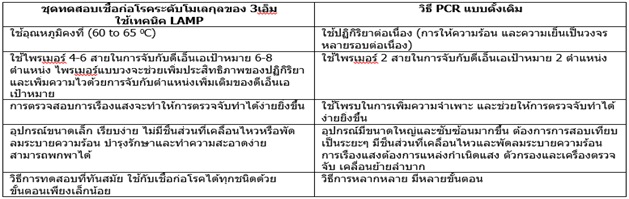
LAMP ใช้ไพรเมอร์ 4-6 เส้นในการเข้าจับกับดีเอ็นเอหรืออาร์เอ็นเอเป้าหมาย 4-6 ตำแหน่ง ในขณะที่ PCR
จะใช้ไพรเมอร์ 2 เส้นในการเข้าจับกับดีเอ็นเอเป้าหมาย 2 ตำแหน่งเท่านั้น
ไพรเมอร์ใน LAMP จะทำการแยกดีเอ็นเอสายคู่ ให้เป็นสายเดี่ยว ทำให้ที่ปลายสายดีเอ็นเอเกิดเป็นวง (loop)
ซึ่งโครงสร้างนี้เป็นพื้นฐานในการเพิ่มจำนวน และทำการเพิ่มจำนวนเป็นทวีคูณมากขึ้นอย่างต่อเนื่องของ ดีเอ็นเอสายคู่
ในขณะที่การทดสอบ PCR จะใช้วงจรความร้อนและความเย็นต่อเนื่องเพื่อเพิ่มปริมาณดีเอ็นเอเป้าหมาย ซึ่งหมายถึงจะต้องใช้อุปกรณ์ที่ซับซ้อนมากยิ่งขึ้น
LAMP เป็นวิธีการเพิ่มจำนวนที่อุณหภูมิความร้อนอุณหภูมิเดียว หมายความว่าต้องได้รับความร้อนสูงถึง อุณหภูมิเดียวที่ 60-65 องศาเซลเซียส จึงมีขั้นตอนที่น้อยกว่าสำหรับนักเทคนิค และอุปกรณ์ที่ใช้ก็มีขนาดเล็กและเรียบง่ายกว่า
นอกจากนี้ LAMP ยังใช้การตรวจสอบการเรืองแสงเพื่อตรวจหาเชื้อก่อโรค ดังนั้นอุปกรณ์จะสามารถตรวจจับการเพิ่มจำนวนของดีเอ็นเอเป้าหมายในระหว่างการทำปฏิกิริยาในเวลาเพียงแค่ 15 นาที
การเปรียบเทียบ LAMP และ PCR
เพราะเหตุใดจึงควรเปลี่ยนไปใช้ LAMP
เทคโนโลยี LAMP สร้างความตื่นเต้นในแวดวงการวิจัยอย่างมาก อีกทั้งยังมีสิ่งพิมพ์ วารสารวิชาการเกี่ยวกับเทคโนโลยีนี้ที่ได้รับการตรวจสอบ ทบทวนโดยคณะผู้เชี่ยวชาญ นักวิชาการกว่า 8,000 บทความเผยแพร่ออกมานับตั้งแต่ LAMP ได้รับการเปิดตัว
คุณลิซ่า มอนเทอโรโซ รองหัวหน้าหน่วยงานกำกับดูแลกิจการอาวุโสความปลอดภัยด้านอาหารของ 3เอ็ม เน้นย้ำถึงความสำคัญของการประเมินห้องปฏิบัติการอิสระ
“สำคัญอย่างยิ่งที่วิธีการของเราจะต้องดำเนินการตามความคาดหวังของผู้ใช้ที่หลากหลาย และการตรวจสอบโดยผู้ตรวจสอบอิสระช่วยเพิ่มความมั่นใจในเรื่องนี้มากยิ่งขึ้นเรากำลังเผชิญกับความปลอดภัยของอาหารซึ่งเชื้อโรคในอาหารสามารถทำให้เกิดการเจ็บป่วยที่รุนแรงหรือกระทั่งเสียชีวิต ความแม่นยำของผลลัพธ์จึงเป็นสิ่งสำคัญอย่างยิ่ง การทดสอบอย่างเข้มงวดที่ดำเนินการโดยโปรแกรมการรับรองเหล่านี้ ช่วยยืนยันถึงประสิทธิภาพ ระดับสูงของผลิตภัณฑ์ของเรา และให้ข้อมูลเพิ่มเติมแก่ลูกค้าของเราเพื่อสนับสนุนการใช้วิธีทดสอบเหล่านี้”
Dr. Raj เล็งเห็นประโยชน์มากมายต่อนักเทคนิค:
"การใช้ PCR จะต้องมีหลายขั้นตอนหลังจากเติมเอนไซม์ เราต้องให้ความร้อน แล้วทำให้เย็นลงและมีการดูดจ่ายสารละลายอีกหลายครั้ง" เขากล่าว "การใช้ LAMP มีการถ่ายตัวอย่างเพียงสองครั้งที่อุณหภูมิเดียว และใช้ระบบการตรวจจับเชื้อเพียงระบบเดียวเท่านั้น”
เขายังเสริมอีกว่ามีตัวบ่งชี้ที่จะแสดงตัวเมื่อถูกทำให้ร้อน โดยจะเปลี่ยนเป็นสีเหลือง และเมื่อเย็นลง จะกลับไปเป็นสีชมพู ดังนั้นคุณจึงรู้ว่าอุณหภูมินั้นถูกต้องแล้ว
“ต้องมีการควบคุมกระบวนการจำนวนมากเพื่อให้แน่ใจว่าทุกอย่างทำงานได้ดี”
ติดต่อเราเพื่อเรียนรู้เพิ่มเติมว่านวัตกรรมความปลอดภัยด้านอาหารของ 3เอ็ม ช่วยคุณได้อย่างไร
รายละเอียดเพิ่มเติมติดต่อ
แผนกผลิตภัณฑ์เพื่อความปลอดภัยของอาหาร (Food Safety)
บริษัท 3เอ็ม ประเทศไทย จำกัด
ชั้น 12 อาคารเสริมมิตรทาวเวอร์ 159 ถนนอโศกมนตรี แขวงคลองเตยเหนือ เขตวัฒนา กรุงเทพฯ 10110
โทรศัพท์: 0 2260 8577, 098-582 4428
คุณนริสรา วานิกร อีเมล์: nwanigorn@mmm.com
คุณเมสิณี ลิขิตรัตนไพบูลย์ อีเมล์: maneelik@mmm.com
คุณณรัณรัชต์ ภู่โยธิน อีเมล์: kbhuyothin@mmm.com


